AI-Powered Resume Optimizer for Job Seekers
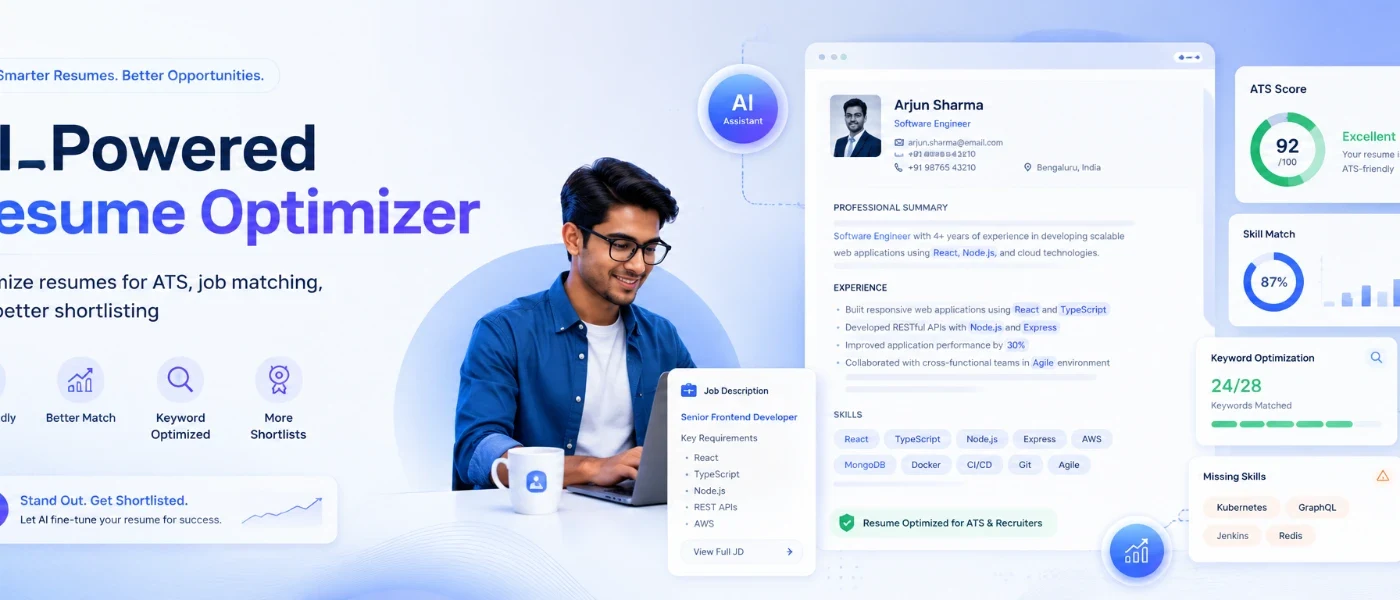
An AI-driven tool that analyzes a candidate’s resume, compares it against a target job description, identifies gaps, and generates an optimized resume with ATS-friendly improvements.
Problem Statement
Many job seekers struggle to create resumes that match recruiter expectations and Applicant Tracking System requirements. Even skilled candidates often get rejected because their resumes lack the right keywords, structure, measurable achievements, or alignment with the job description. Manual resume review is time-consuming, inconsistent, and often inaccessible to students and early-career professionals.
Solution Overview
This innovation provides an AI-powered resume optimization platform where users upload their resume and paste a job description. The system analyzes resume strength, missing skills, keyword alignment, ATS compatibility, grammar quality, and role relevance. It then generates personalized recommendations, improved bullet points, a match score, and an optimized resume version. The solution helps candidates present their skills more effectively and improves their chances of getting shortlisted.
Technical Documentation for AI-Powered Resume Optimizer
Abstract
AI-Powered Resume Optimizer is a career-focused AI solution that helps job seekers improve their resumes based on a target job description. The system analyzes resume content, identifies missing skills, evaluates ATS readiness, measures job-description alignment, and recommends improvements using NLP and Generative AI. It supports students, freshers, and professionals by transforming generic resumes into structured, keyword-optimized, recruiter-friendly profiles.
Solution Approach
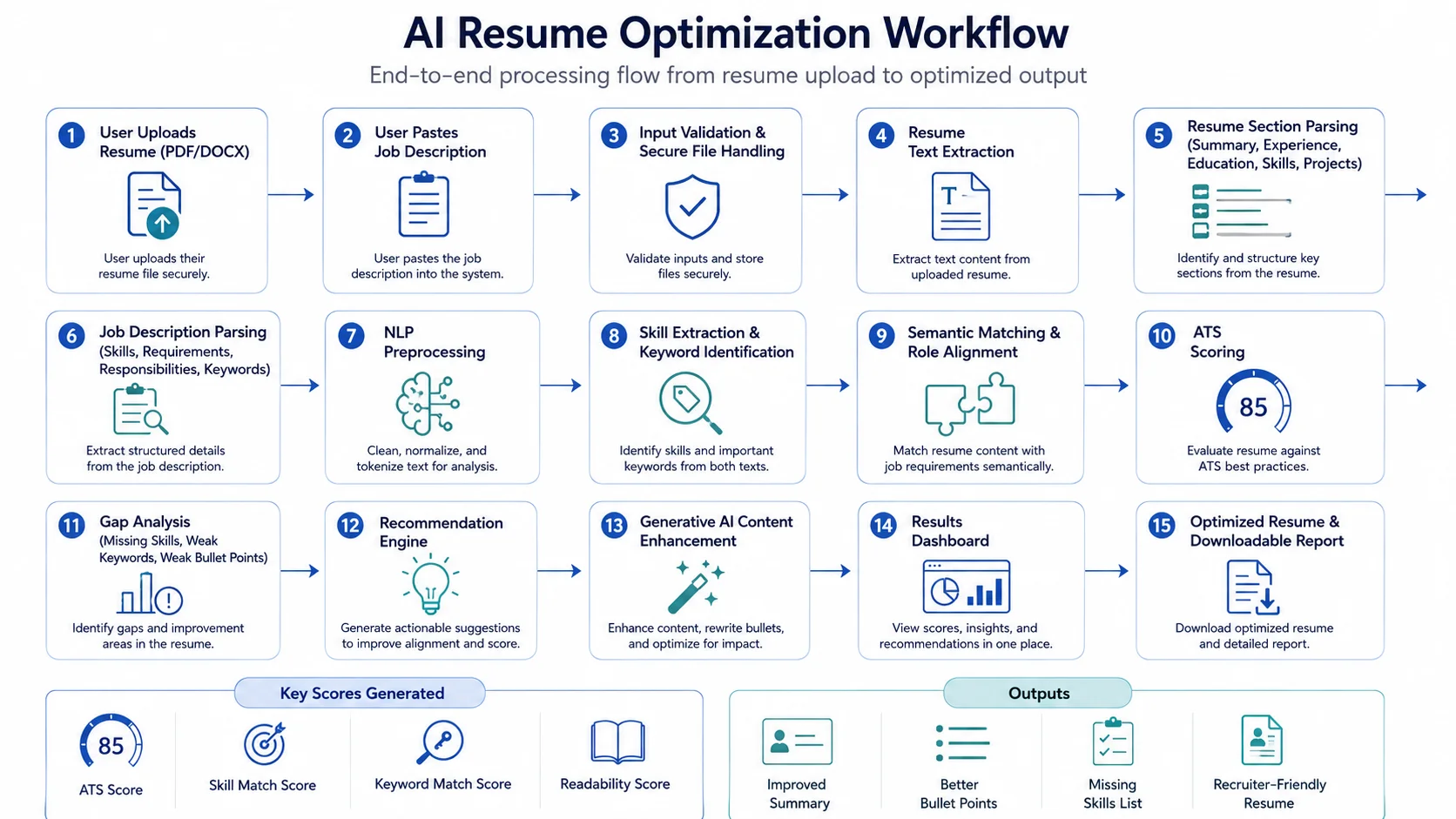
The solution follows a resume-to-job matching workflow. First, the user uploads a resume and enters a target job description. The resume parser extracts key information such as personal summary, work experience, education, skills, certifications, projects, and achievements. The job description parser identifies required skills, responsibilities, qualifications, keywords, tools, and role expectations. The AI engine then compares both inputs using NLP techniques such as keyword extraction, semantic similarity, entity recognition, and skill mapping. The system calculates an ATS score, job match score, keyword coverage score, missing skills, grammar quality, and content strength. Based on this analysis, it generates practical recommendations such as improved bullet points, stronger action verbs, measurable achievements, missing keyword suggestions, and role-specific resume summary improvements.
Problem Context
Many candidates are rejected before the interview stage because their resumes are not optimized for Applicant Tracking Systems or recruiter screening. Skilled candidates often fail to communicate their capabilities clearly due to poor formatting, missing keywords, weak summaries, generic project descriptions, or lack of measurable achievements. Existing resume builders mostly provide templates but do not deeply analyze role fit, skill gaps, or job-description alignment. Manual resume reviews are time-consuming, inconsistent, and difficult to scale for colleges, training institutions, and career platforms. This innovation solves the problem by providing instant AI-powered resume analysis and personalized improvement guidance.
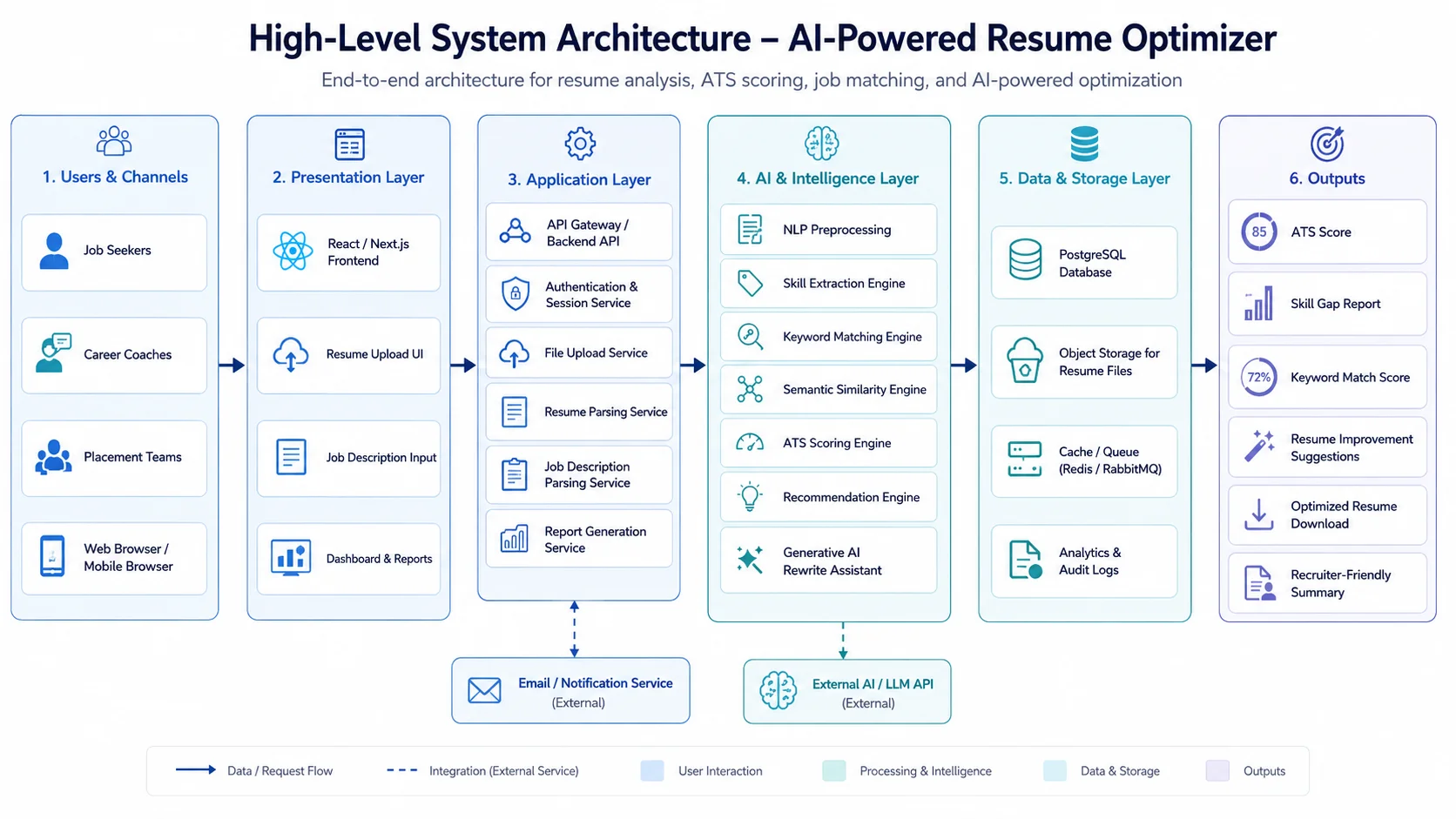
Architecture Diagram
Screenshots
Implementation Notes
Technical Design
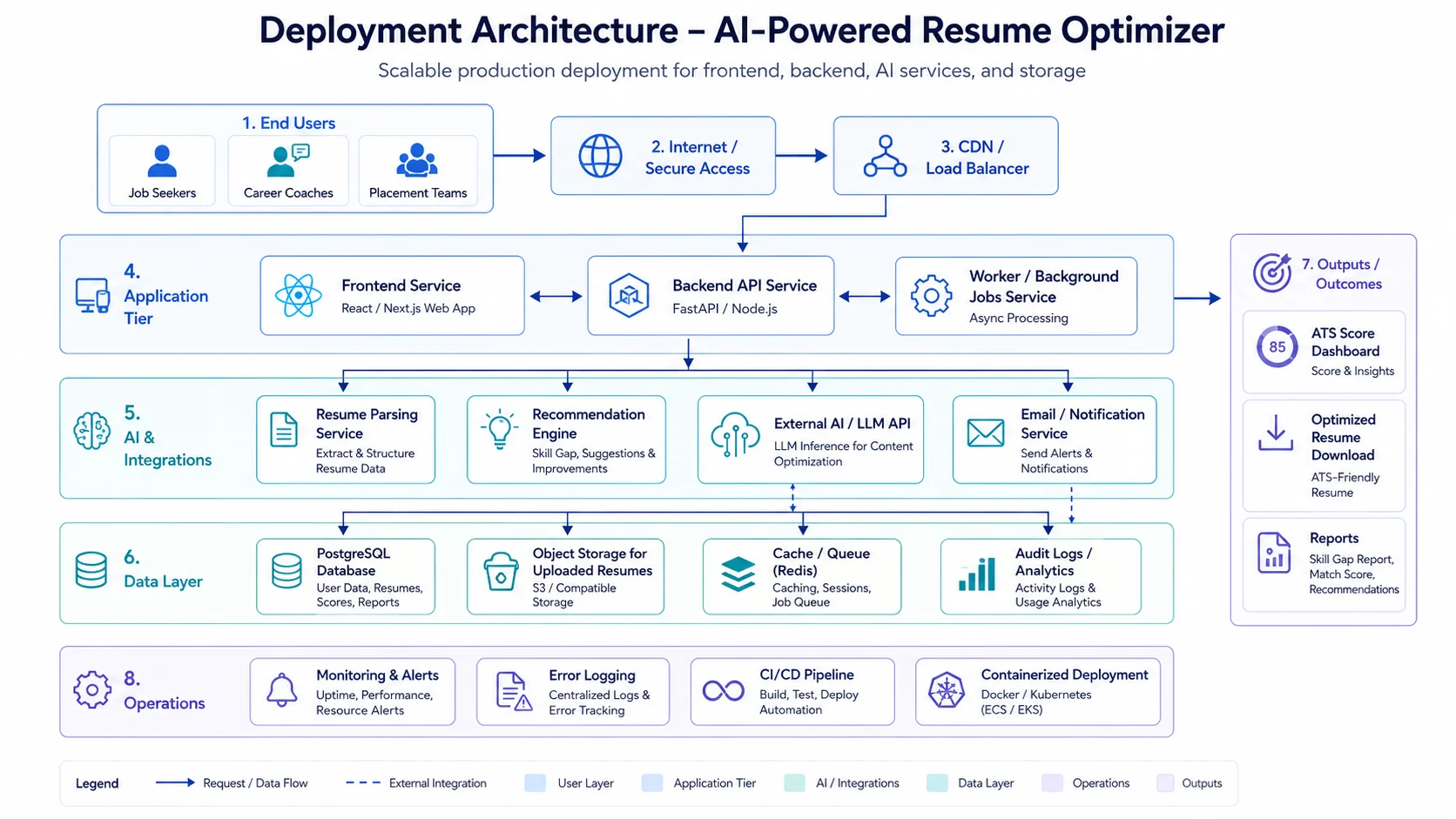
The frontend is built using React or Next.js with a clean user interface for resume upload, job description input, score visualization, and recommendation display. The backend is built using FastAPI or Node.js to manage file uploads, resume parsing, AI processing, user sessions, and report generation. The resume parser extracts text from PDF or DOCX files and structures the data into sections such as summary, skills, experience, education, certifications, and projects. The job description parser extracts required skills, responsibilities, seniority level, tools, domain keywords, and qualification expectations.
Challenges Faced
One major challenge is accurately extracting structured information from different resume formats. Resumes may have inconsistent layouts, tables, columns, images, or poor formatting. Another challenge is avoiding generic AI suggestions and ensuring recommendations are relevant to the target job description. Maintaining ATS compatibility is also important because visual resumes may look attractive but fail automated screening. The system must balance readability, keyword optimization, recruiter expectations, and honesty. Another challenge is preventing over-optimization, where the resume becomes keyword-stuffed or unrealistic.
Outcomes & Results
The innovation successfully demonstrates how AI can improve resume quality and job-readiness. It helps users identify missing skills, improve weak bullet points, align resumes with job descriptions, and understand their ATS readiness. Expected outcomes include improved resume clarity, better keyword coverage, stronger role alignment, reduced manual review effort, and higher confidence for job seekers. For colleges and training institutions, this solution can support placement readiness programs by giving every student a personalized resume improvement report.
Future Enhancements
Future enhancements include LinkedIn profile optimization, cover letter generation, interview question generation based on resume gaps, integration with job portals, resume version history, multi-language resume support, recruiter feedback loop, AI mock interview integration, college placement dashboard, and analytics for tracking student job readiness. The solution can also be expanded into a complete career readiness platform with resume scoring, portfolio analysis, skill certification mapping, job recommendation, and personalized learning path suggestions.
Files (14)
Comments (0)
Join SkillNyx to comment
Free for learners and builders. Share your feedback on this innovation.